


DETALJNIJE
Patron and Comforter
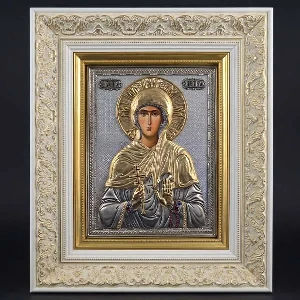
- Saint Paraskeva is the embodiment of conscious sacrifice and total devotion to God. Her significance in the home is a reminder of the importance of inner beauty and the power of silent prayer.
- Historical Feat: Paraskeva left wealth and a comfortable life in Epivatos to live for years in the desert, battling heat, hunger, and temptation, purifying her heart to perfection.
-
Message to the Household: She teaches us patience and mercy. Her presence in the home brings a blessing of peace, especially watching over women and mothers, and healing spiritual and physical wounds.
Craftsmanship & Materials
-
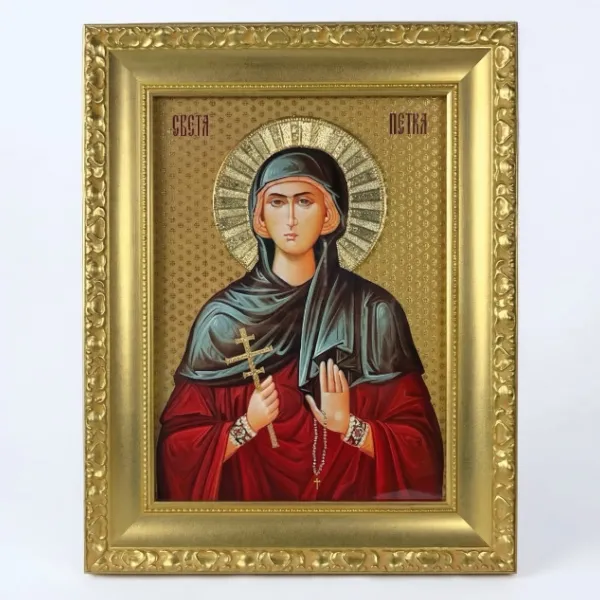
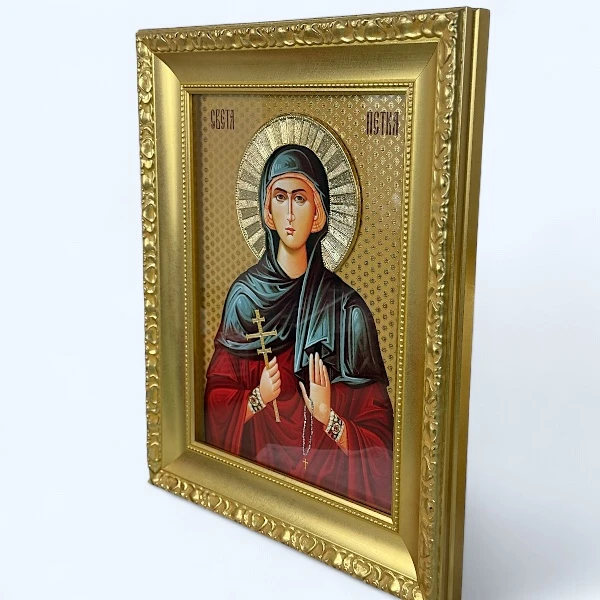
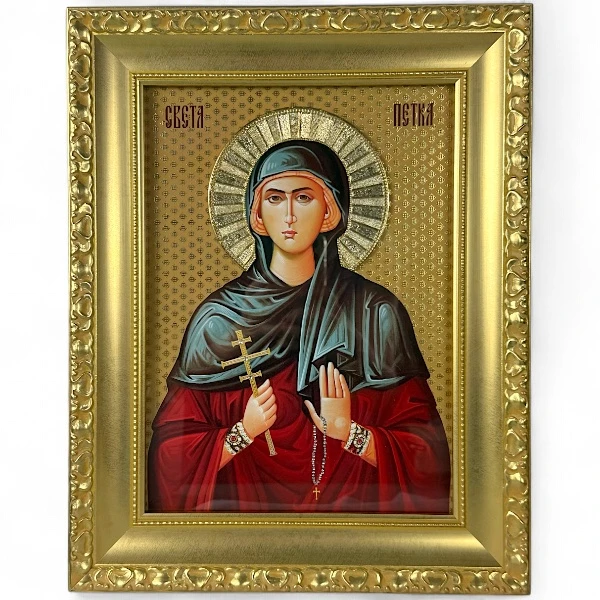
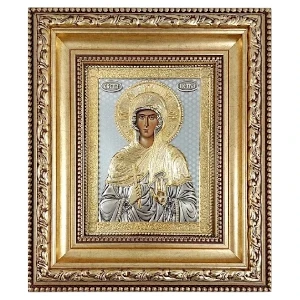
Premium Gold Finish: This icon features refined relief work with gold tones, highlighting the black monastic habit and the cross—symbols of Paraskeva’s asceticism.
-
Canonical Accuracy: The artistry strictly follows Orthodox iconography, depicting the Saint with a gentle and enlightened countenance that brings instant peace to the observer.
-
Diaspora Heritage: Handcrafted by Serbian artists, it serves as a powerful link to spiritual roots for families in the USA, Canada, and Australia.
-
Durable Wood: The use of premium solid wood and high-quality protective coatings ensures this icon remains a vibrant centerpiece of the home for generations.
Saint Paraskeva
Saint Paraskeva lived in the 11th century in the town of Epivatos, on the shores of the Sea of Marmara. A fascinating historical fact is that Paraskeva was a very wealthy and beautiful young woman, yet after her parents' death, she distributed her entire fortune to the poor and embarked on an ascetic path that took her through Constantinople to the Jordanian desert. History records her return to her hometown shortly before her death, where no one recognized her as she was gaunt from decades of fasting. She was buried as a stranger outside the cemetery, and her body was discovered incorrupt after she appeared in a dream to a faithful believer.
Her relics have a fascinating historical trajectory—they traveled from Epivatos, through Tarnovo and Vidin, to Belgrade, where Princess Milica requested them from Sultan Bayezid and enshrined them in the Ružica Church at Kalemegdan. After the fall of Belgrade in 1521, the relics were taken to Constantinople, and since 1641, they have rested in Iași, Romania. The icon in your home serves as a reminder that a woman's true strength lies in prayer and silence—it teaches us that God is the only true refuge and reminds us that grace is stronger than all of history's storms, preserving the peace and harmony of every Christian home through the centuries.
FAQ - Frequently asked questions
Why is masking important with Slavic icons?
Lamination gives the icon strength, stability and contributes to the longevity of the product.
In what style are Orthodox icons made?
The icons follow the traditional Byzantine style characteristic of Orthodox art.
Are the icons gold plated?
Yes, the halo is made of 24 carat metal gilding.
Are the regular icons good quality?
Yes, the classic icons have quality processing, decorative details and a very elegant look.
International Designations
USA / Canada / UK / Australia: Saint Paraskeva / St. Petka of the Balkans – Gilded Icon, Serbia / Montenegro / Bosnia: Prepodobna mati Paraskeva (Sveta Petka), Greece / Cyprus: Agia Paraskevi i Epivatini (Αγία Παρασκευή η Επιβατινή), Russia / Ukraine / Belarus: Prepodobnaya Paraskeva Serbskaya (Преподобная Параскева Сербская), Germany / Austria: Hl. Paraskeva von dem Balkan – Vergoldete Ikone, Romania: Sfânta Cuvioasă Parascheva de la Iași
Check our icons collection here.
Recommended
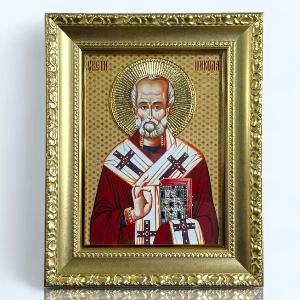
Icon Saint Nicholas the Traveler - Gilded icon - (41x33)
Rosary Tricolor
Related products

Recenzije kupaca
Barbara 26.12.2024
Ikona je prelepa i jos mnogo lepsa uzivo!