


A Guide to Serbian Wedding Customs
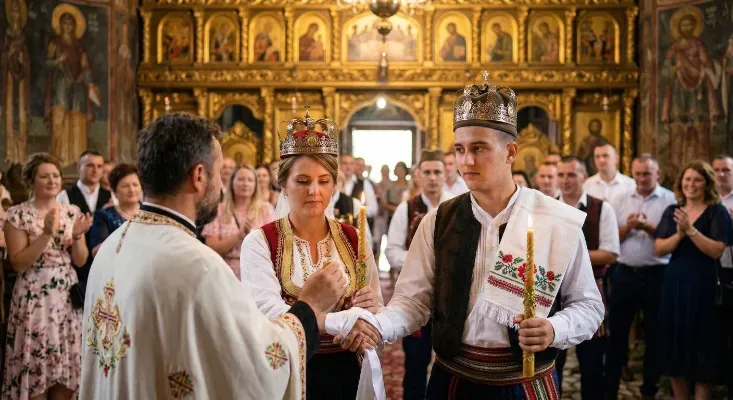
Discover the deep spiritual meaning of Serbian wedding traditions. From shooting the apple to the holy crowning – learn why these customs are vital today.
THE SIGNIFICANCE AND MEANING OF WEDDING TRADITIONS AND CUSTOMS
A day remembered for a lifetime, filled with joy and excitement, brings with it a wealth of customs and traditional values. In this blog, we will walk you through what a traditional wedding day looks like, focusing on several time-honored customs from Serbia, as well as traditions from other nations. Our goal is to present their significance and deeper meaning, exploring why they remain so vital to our identity.
THE WEDDING CALL (THE INVITATION)
While wedding invitations today are often done in a modern way—befitting the technology and times we live in—there was once a very specific ritual for calling guests. This tradition is still practiced in parts of Serbia today due to its profound cultural value.
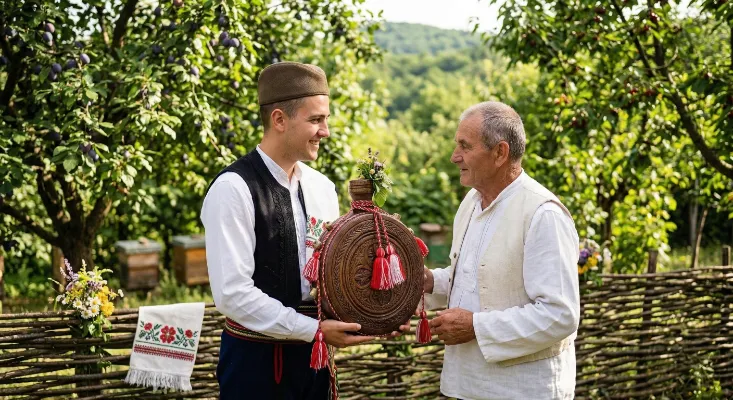
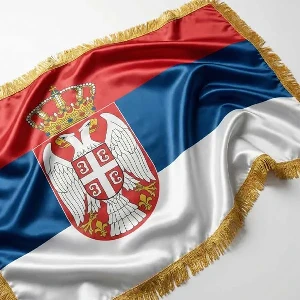
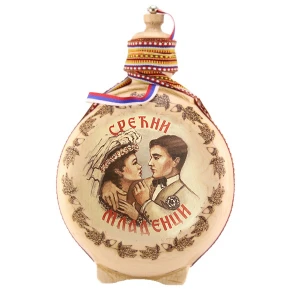
Before the wedding, the head of the groom’s household or the groom himself visits the guests personally, carrying a Buklija (a traditional wooden flask) and the Serbian flag. The Buklija is filled with rakija or wine; a toast is made with the head of the invited household, and by taking a sip, the invited family officially confirms their attendance. This toast represents honor and a solid bond between the two families.
The Buklija itself is usually adorned with religious symbols, such as Saint Nicholas or the family's patron saint, or the Serbian Cross. The icon on the Buklija represents the presence of the saint, while the Serbian Cross with the four "S" symbols (Samo Sloga Srbina Spasava – Only Unity Saves the Serb) signifies the importance of marriage and family as the foundation for the survival of the nation and society.
After the toast, the invited family ties a Peškir (a hand-woven traditional towel) or a small amount of money around the Buklija as a gift for the invitation. These towels were once handmade by the bride and her mother over many months, serving as a symbol of skill, hard work, and respect.
In modern times, much of this ritual takes place in front of the bride’s house when the wedding party arrives to "collect" her.
ARRIVING FOR THE BRIDE AND SHOOTING THE APPLE
This is the next pivotal event on the wedding day. The groom, accompanied by a large procession of guests, sets out for the bride’s home. At the head of the column is the Barjaktar (the Flag Bearer), who holds the Serbian flag high and leads the way.
Upon reaching the bride’s house, the wedding party finds the gates locked and an apple placed at the highest point of a tree branch or the roof of the house. To prove that he is capable and worthy of protecting and defending his future family, the groom must shoot the apple down. Only once the apple falls to the ground is he permitted to enter and "get" his bride.
Following this comes the "Buying of the Bride." The groom and his Dever (the groom's brother) attempt to reach the bride but are met with a final obstacle: the bride’s brothers, who demand a symbolic amount of money to hand her over. The bride is led out in slippers, and she is then gifted a new pair of shoes—previously purchased by the Stari Svat (usually the groom's uncle or the oldest unmarried male family member). The groom places the largest banknote he has inside the shoe for luck. The Dever presents the shoes to the bride, and in return, she ties a special decorative towel around him.
The most emotional moment follows: the bride is led out of her home by her brother or a close male relative and handed over to the Dever. This signifies the moment the bride transitions into a new family, which now takes on the responsibility of caring for and protecting her.
SPIRITUAL UNION: THE HOLY MYSTERY OF MARRIAGE
The Holy Mystery of Crowning
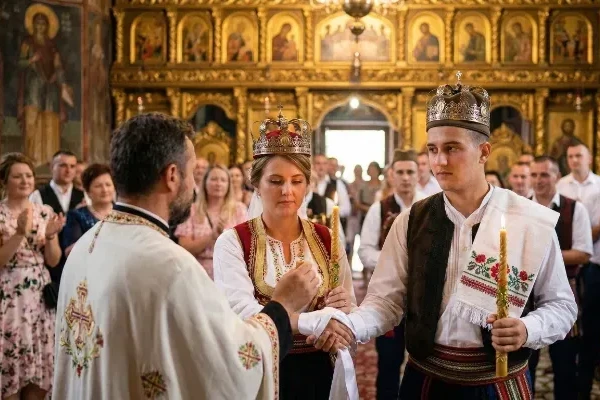
Unlike a legal contract, a church wedding is a Holy Mystery in which two people become "one flesh." The central symbol of this rite is the Wedding Crowns (Venci), a custom dating back to Byzantium. They carry a dual philosophical meaning: they represent the newlyweds as the King and Queen of their new community—a home that becomes a "church in miniature." Simultaneously, they serve as a reminder of martyr crowns, symbolizing the voluntary sacrifice of one’s ego for the other and a promise of eternal fidelity while carrying the "cross of life" together.
The Binding of Hands and the Light of Faith
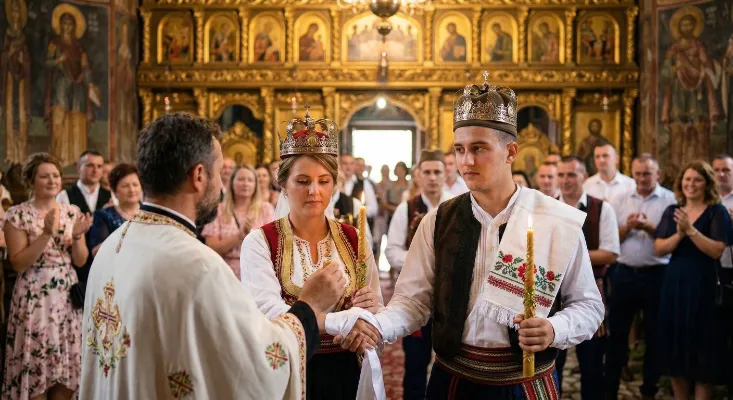
During the ceremony, the priest joins the couple's right hands and wraps them in a White Silk Cloth. This is a visual representation of an unbreakable union and the purity of their new beginning. Bound together, they walk three times around the Altar (the Triple Procession), where the number three honors the Holy Trinity and the circle symbolizes the eternity of their love. This cloth is kept in the home for decades as a family relic. Along with this, the Wedding Candles held by the couple represent the light of faith illuminating their path, symbolizing warmth, enlightenment, and their readiness to walk through life performing good deeds.
ARRIVAL AT THE NEW HOME: RITUALS OF FERTILITY AND BLESSING
The return from the church is marked by symbolic actions designed to ensure prosperity and the continuation of the family line.
The Nakonče (The Little Child): Before entering the house, the bride is presented with a small male child—the nakonče. She lifts the child high, rotates him three times in the direction of the sun, and kisses him. This is a living prayer for fertility and her symbolic acceptance of the role of a mother within the family.
The Sieve and the Grain: At the entrance, the mother-in-law meets the bride with a Sieve filled with grain and candy. The bride scatters the grain to the four corners of the world to seed peace and abundance, then tosses the sieve onto the roof. If it remains on the roof, it is a sign that the marriage will be stable and long-lasting.
Crossing the Threshold: Finally, the groom lifts the bride and carries her over the threshold. In Serbian mythology, the threshold is a sacred border where the spirits of ancestors reside. By carrying her, the groom acts as a protector, ensuring she does not disturb the ancestors and welcoming his "treasure" into their private sanctuary.
We hope you found it pleasant and interesting to walk with us through the rich paths of our tradition.
Related products
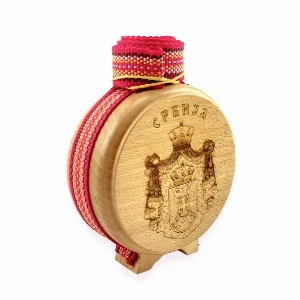
Wooden flask - Serbia 0.1 L
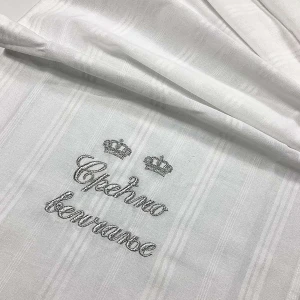
Linen wedding towel - srecno vencanje
Read also
Orthodox Feast Days and Family Slavas in August – Calendar, Traditions and Meaning
Colorful Šajkača – Serbia's Traditional Hat in a Modern Style
A Guide to Serbian Wedding Customs
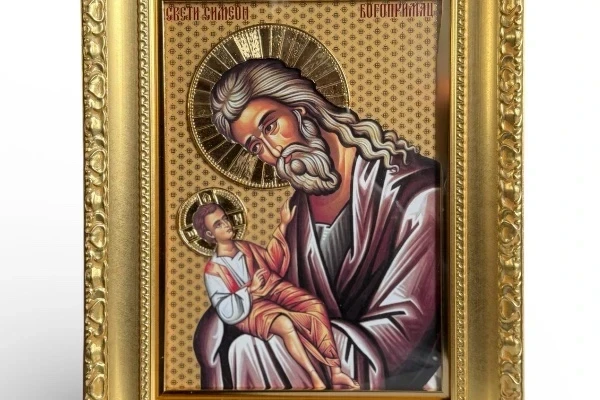
St. Simeon the God-receiver and Anna the Prophetess – The Witnesses of Christ
Saint Simeon the God-receiver: The Righteous Witness of the Promised Messiah
…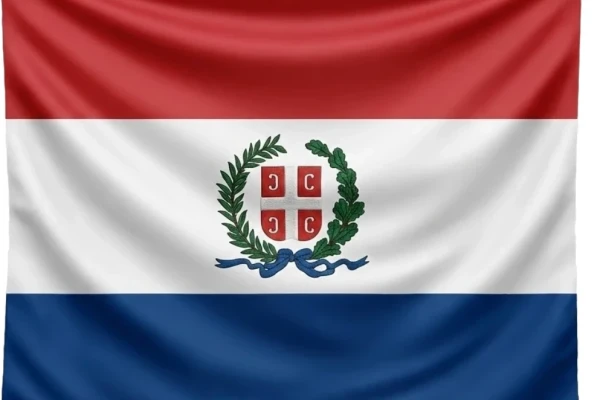
The Meeting of the Lord (Sretenje) – Serbian Statehood Day & Traditions
Sretenje: The Encounter of God and Man & the Celebration of Serbian Liberty
…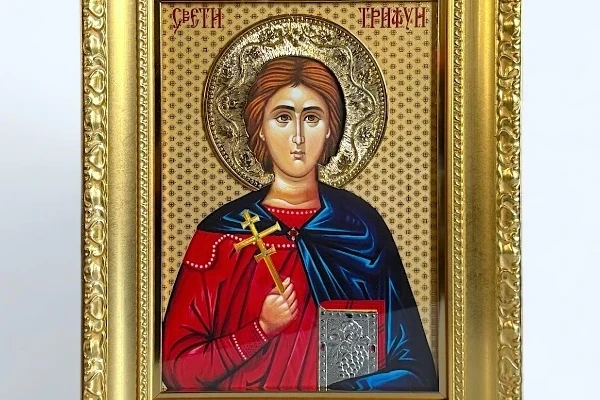
Slava St. Tryphon – Patron of Vineyards, Customs and Tradition
Saint Tryphon: The Guardian of Vineyards and the Orthodox Tradition of Love
…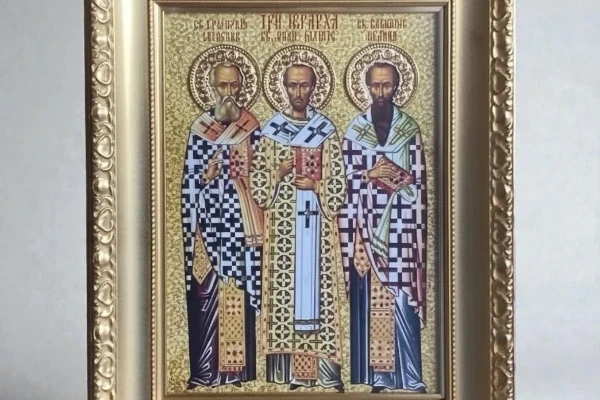
The Three Holy Hierarchs – Basil the Great, Gregory the Theologian, and John Chrysostom
The Three Holy Hierarchs: The Pillars of Orthodox Wisdom and Unity
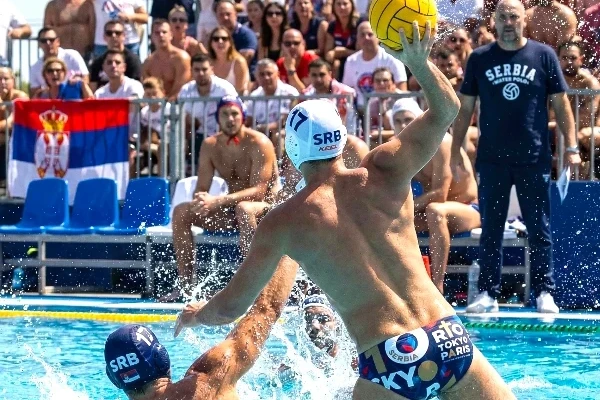
Serbian Water Polo: Fun Facts, History, and Champions' Gear
When you mention Serbian sports, the first associations with absolute dominance,…
Serbian Slava in February: Celebrating Faith and Identity
February, though the shortest month, is rich with significant Patron Saint Days…